AI Mental Health Development
We build safety-guardrailed support tools, validated screening flows, and clinician-augmentation systems for behavioral-health products, with crisis escalation and HIPAA architected from day one.
What we build
Crisis detection & escalation
Self-harm and suicidal-ideation classifiers that break out of the conversation and route to 988, crisis text lines, or a live clinician: the highest-priority path in every build.
Safety-guardrailed support tools
Conversational CBT/DBT-informed companions with hard system-prompt boundaries, refusal patterns, and no unsupervised clinical advice or medication guidance.
Validated screening flows
PHQ-9, GAD-7, C-SSRS, and PCL-5 instruments implemented to spec, scored correctly, with severity banding and clinician-visible results.
Mood & symptom tracking
Longitudinal check-ins, journaling with sentiment signals, and trend surfacing that flags deterioration between sessions rather than replacing them.
Clinician augmentation
Session-prep summaries, between-visit alerting, and measurement-based-care dashboards that give therapists more signal without adding documentation load.
Clinical safety guardrails
Human-in-the-loop review, immutable decision logs on every high-risk response, and never-miss-crisis design reviewed by your clinical advisor on each build.

Clinical tools that fit into real workflows
Reference architecture
- Patient Interface
- Risk & Crisis Classifier
- Guardrailed LLM / Screening Engine
- Escalation Router (988 / clinician)
- Clinician Dashboard + EHR Write-back
A typical AI mental-health system: every patient message passes through a risk and crisis classifier first; low-risk turns continue to the guardrailed LLM and screening engine, while high-risk signals short-circuit straight to the escalation router (988, crisis text, or a live clinician). Screening results and alerts write back to the clinician dashboard and EHR.
Integrations shipped across 16+ partners.
EHR vendors (FHIR)
- Epic
- Cerner
- Athenahealth
- DrChrono
Crisis & referral
- 988 Suicide & Crisis Lifeline
- Crisis Text Line
- Findhelp (referral network)
Behavioral-health EHR / practice
- SimplePractice
- Healthie
- TherapyNotes
Telehealth & messaging
- Twilio Video
- Twilio Programmable Messaging (HIPAA)
- Zoom Healthcare
LLM providers
- OpenAI (Azure OpenAI, HIPAA-eligible)
- AWS Bedrock
- Anthropic via AWS
Which engagement fits
Project Build
For a new behavioral-health platform: support tool, screening, crisis escalation, and clinician dashboard, in a focused 10–14 week scope.
Explore Project BuildEmbedded Squad
For scaling beyond MVP: a dedicated team that ships alongside yours as safety guardrails, instruments, and coverage expand.
Explore Embedded SquadTech Audit
For assessing an existing build: a 5-day diagnostic of architecture, crisis-safety coverage, and where your HIPAA compliance stands.
Explore Tech AuditCompliance & clinical safety
| Standard | Status | What we ship |
|---|---|---|
| HIPAA | Compliant | Compliant builds with PHI handling, access controls, encryption, and audit logging architected from day one, including the especially sensitive category of mental-health records. See /compliance/hipaa. |
| Crisis & suicide-risk safety | In progress | Self-harm and suicidal-ideation classifiers with hard escalation to 988 and crisis text lines: engineered by us, and reviewed by your clinical advisor on every build. Never-miss-crisis is a design requirement, not best-effort. |
| FDA SaMD / digital therapeutics | In progress | A tool that claims to treat a condition MAY be regulated as Software as a Medical Device. We architect for SaMD and DTx pathways, but a formal determination and any clinical-evidence strategy require your FDA regulatory consultant. |
| Scope & disclaimers | Compliant | Support software does not diagnose, treat, or replace a licensed clinician. We build in the disclaimer language, scope limits, and refusal patterns that make that boundary explicit to patients and providers. |
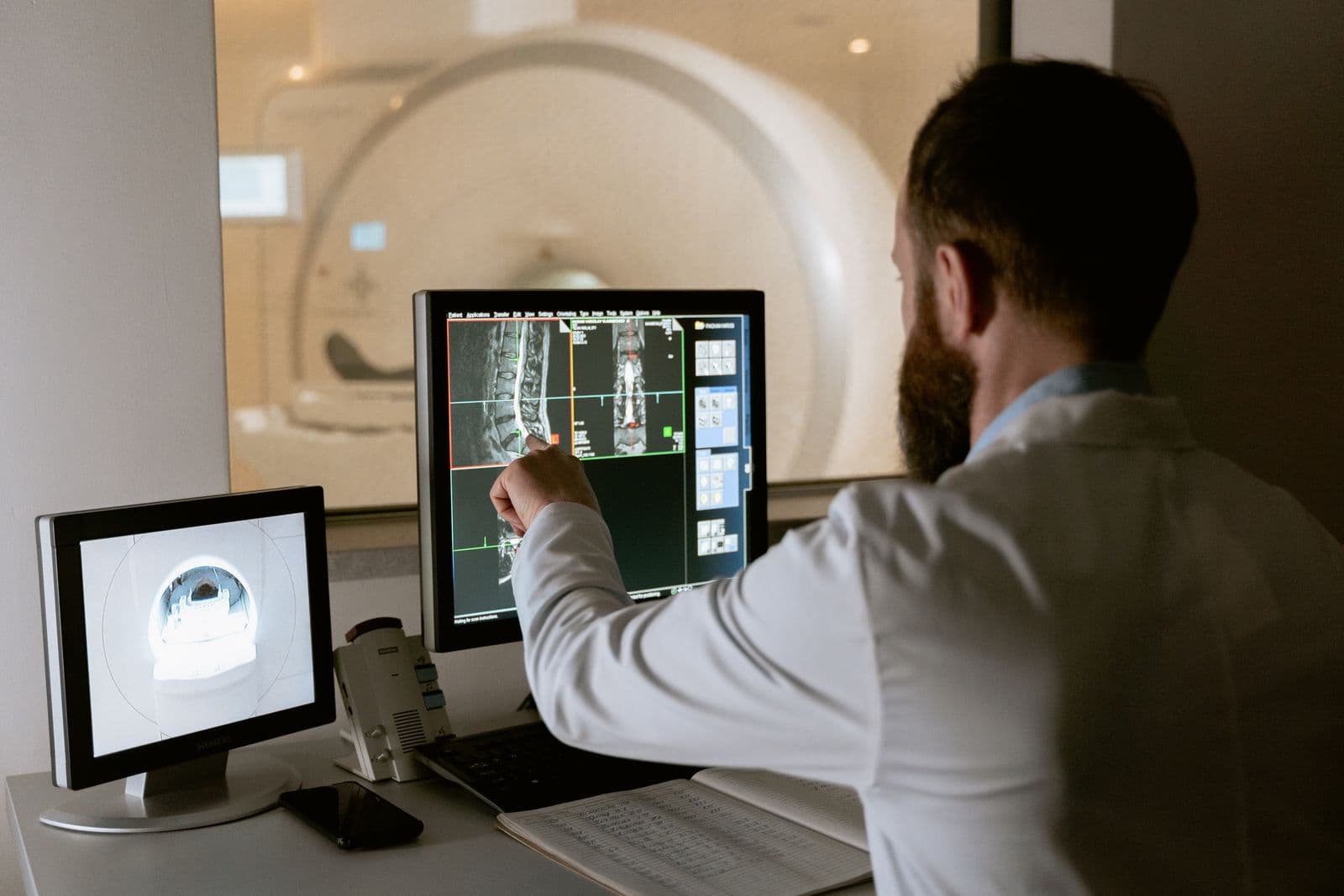
Patient data, provider workflow, regulatory guardrails
Clinical systems are measured by uptime and auditability, not marketing slides. We build for the reality of busy practices, compliance deadlines, and the patients who depend on both.
Frequently asked questions
We build crisis handling first, before anything else in the product. Every message passes through a risk classifier before the support flow; a self-harm or suicidal-ideation signal short-circuits the conversation and routes immediately to 988, a crisis text line, or a live clinician per your escalation policy. Those escalation patterns are reviewed by your clinical advisor on every build: never-miss-crisis is a design requirement.
Building an AI mental-health product? Schedule a meeting.
We’ve architected support tools, screening flows, and clinician-augmentation systems with crisis escalation and HIPAA built in from day one. Tell us what you’re building.