AI Patient Triage & Intake Development
We build symptom checkers, AI-powered intake flows, and routing engines that get patients to the right care faster, with HIPAA architected from day one.
What we build
Symptom checker engines
LLM-powered symptom assessment, condition probability modeling, and red-flag escalation logic.
Pre-visit intake flows
Structured patient data collection, dynamic form logic based on responses, and EHR-ready output (FHIR R4).
Triage routing engines
Care-level routing (self-care / urgent care / ED / 911) and provider matching algorithms.
Conversational patient interfaces
Chat-style intake, voice intake where applicable, and accessibility compliance to WCAG AA.
Clinical safety controls
High-acuity symptom escalation patterns, never-miss-emergency design, and audit trails on every decision.
Provider dashboard integration
Triage results piped to the clinician UI, alert prioritization, and queue management.

Clinical tools that fit into real workflows
Reference architecture
- Patient Interface
- LLM Triage Engine
- Clinical Decision Logic
- Routing Engine
- Provider Dashboard + EHR Write-back
A typical AI patient triage system: the patient interface feeds the LLM triage engine, clinical decision logic applies red-flag and acuity rules, the routing engine directs each patient to the right care level, and results write back to the provider dashboard and EHR.
Integrations shipped across 14+ partners.
EHR vendors (FHIR)
- Epic
- Cerner
- Athenahealth
- eClinicalWorks
Telehealth
- Twilio Video
- Doxy.me
- Zoom Healthcare
Care coordination
- Salesforce Health Cloud (limited)
- Custom CRMs
Communication
- Twilio Programmable Messaging
- SendGrid (HIPAA tier)
LLM providers
- OpenAI (Azure OpenAI, HIPAA-eligible)
- AWS Bedrock
- Anthropic via AWS
Which engagement fits
Project Build
For a new triage platform: symptom checker, intake, routing, and clinical safety controls, built in a focused 10–14 week scope.
Explore Project BuildEmbedded Squad
For scaling beyond MVP: a dedicated team that ships alongside yours as acuity logic, integrations, and coverage expand.
Explore Embedded SquadTech Audit
For assessing an existing build: a 5-day diagnostic of architecture, clinical safety, and especially HIPAA compliance.
Explore Tech AuditCompliance & clinical safety
| Standard | Status | What we ship |
|---|---|---|
| HIPAA | Compliant | Compliant builds with PHI handling, access controls, encryption, and audit logging architected from day one. See /compliance/hipaa. |
| FDA SaMD | In progress | Triage software MAY be regulated as Software as a Medical Device depending on intended use. We architect for SaMD compliance, but a formal determination requires your FDA regulatory consultant. |
| Clinical safety | In progress | Red-flag symptom escalation logic and never-miss-emergency design, engineered by us and reviewed by your clinical advisor on every build. |
| Liability & disclaimers | Compliant | Software does not replace clinical judgment. We build in the disclaimer language and audit trails that make that boundary explicit to patients and providers. |
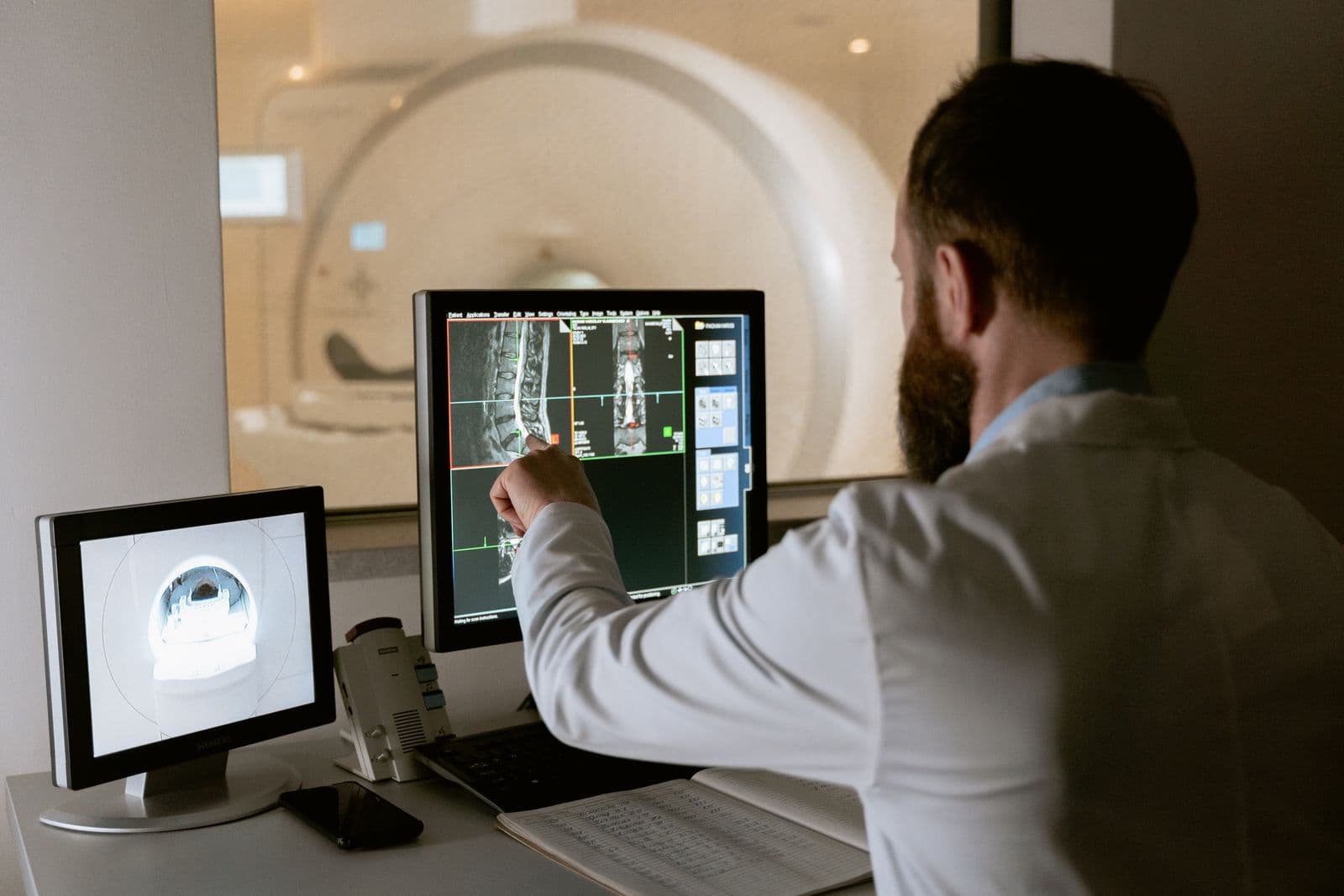
Patient data, provider workflow, regulatory guardrails
Clinical systems are measured by uptime and auditability, not marketing slides. We build for the reality of busy practices, compliance deadlines, and the patients who depend on both.
Frequently asked questions
Sometimes. It depends on intended use and risk classification. Triage software can fall under FDA oversight as Software as a Medical Device (SaMD). We architect your build for SaMD compliance from the start, but a formal determination needs an FDA regulatory consultant; we’ll tell you honestly where your product sits and where to get that sign-off.
Building an AI patient triage product? Schedule a meeting.
We’ve architected symptom checkers, intake flows, and routing engines with HIPAA and clinical safety built in from day one. Tell us what you’re building.